Gender disparity has not improved over the last two years
Financial Services (FS) sector must implement strategy to attract more female talent as only 794 women have had partnership status in last year
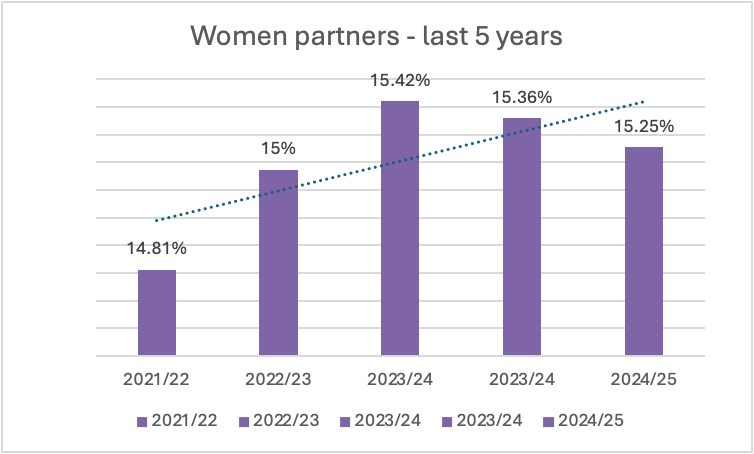
Women represent just 15.3% of partners in hedge funds, private equity and other financial services partnerships in the UK, virtually unchanged from the previous year’s 15.4%, according to new data from Fox & Partners, the specialist employment and partnership law firm.
Research from Fox & Partners shows that only 794 women were partners at hedge funds, private equity firms and other financial services partnerships, compared to 4,411 male partners*.
Financial services partnerships, including hedge funds and private equity, fall behind the wider UK financial services sector on female representation in senior roles.
Previous study from Fox & Partners shows that women hold 18.6% of senior leadership roles across UK financial services businesses, compared with just 15.3% of partners at partnership firms.**
Says Catriona Watt, Partner at Fox & Partners: “There seems to have been very little progress in gender diversity within these firms over the last two years.”
“One reason may be the pushback against DEI policies, since the election of Donald Trump, is going to see progress continue to slow or even reverse.”
“Whilst the UK and European arms of global financial services firms are not subject to the same kind of pressure as they are in the US, it is hard to argue that the current US Government has created a helpful DEI environment for UK FS businesses.”
Catriona Watt says that private equity and hedge fund firms had been under growing pressure to show real commitment to gender diversity from institutional investors. Diversity statistics were being used to influence investment decisions, and firms with poor track records risked losing out.
The New York City retirement system provides a clear example of how increasing diversity in investment management can deliver strong performance outcomes. The retirement fund, which serves 800,000 beneficiaries, increased it’s exposure to minority and women-led asset management firms between 2022 and 2024, with assets under management increasing from $16.8 billion in 2022 to over $23 billion in 2024.
For FY23-24 the fund achieved a combined net return of 10%, surpassing the 7% actuarial target, with The NYC Comptroller, Brad Lander, identifying increased investment in diverse and emerging managers as a key contributor to this performance.***
Historically, however, hedge funds and private equity firms have not faced the same levels of external scrutiny on diversity as publicly listed financial service companies such as large banks. Watt notes this could be one of the reasons for slow progress, and questions whether the lack of scrutiny has delayed reforms.
Women partners as a percentage of all partners in the financial sector shows no improvement
Catriona Watt warns that the slowdown in the pace of change could lead to more equal pay and discrimination disputes.
Catriona explains: “If firms fail to make progress, they not only increase the risk of legal claims but also reinforce a cycle where women are discouraged from pursuing leadership roles in these environments.”
Watt adds “At the current rate, gender parity among partners could still be decades away. Leadership must keep working if they want meaningful progress – especially in this period when some employers might be nervous about highlighting their DEI efforts.”
Fox & Partners suggests a number of actions firms can take to improve gender diversity, including:
- Launching mentoring or championing initiatives to support women progressing into senior roles
- Ensuring structures within FS partnerships provide an environment where women can thrive
- Ensuring leadership visibly supports diversity and embeds it throughout the organisation, including messaging from the top
- Signing public commitments such as Level 20 or the Treasury’s Women in Finance Charter
* Data provided by the FCA with year-end 31 July 2025
** Data provided by the FCA with year-end 25 October 2024 covering senior executive roles such as CEOs, Executive Directors, Chief Risk Officers through to non-exec roles such as Senior Independent Director.
*** Data obtained from the MWBE and Emerging Manager Pension Investments, Fiscal Year 2024 report.
The release has had extensive external coverage including: